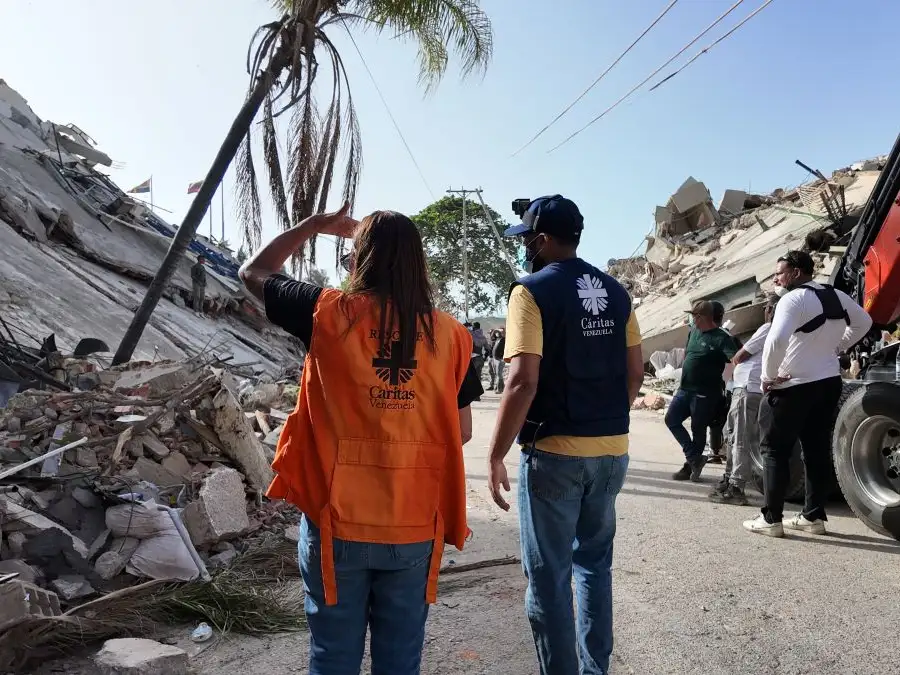
On Saturday 3 January the US military carried out attacks on four military bases in Venezuela, killing 80 people and leaving more than 90 injured, including civilians and Venezuelan and Cuban military. The country’s president, Nicolás Maduro, was seized and will now face indictment in New York on a range of charges related to drug trafficking and ‘narco-terrorism’.
The situation is complex and rapidly developing, but there are grave fears that this move could worsen instability in Venezuela and the ongoing conflict in Colombia, and may even lead to further attacks on other Latin American governments.
Many Venezuelans are already facing extreme challenges getting access to basic goods and services after years of depression and hyper-inflation pushing families to the brink. Around 8 million Venezuelans have left the country in the last five years.
Colombia and Venezuela share a border of more than 2,000 km, an area that is a stronghold for illegal armed groups and organised crime. Changes in Venezuela and direct control or influence from the US into the region will impact the internal armed conflict in Colombia’s border regions, with some armed groups already having put out statements of support for the Venezuelan government.
The Colombian government has declared a state of economic, social and environmental emergency in border regions to prepare for a potential humanitarian crisis or surge in refugees. Currently more than 3 million Venezuelans are in Colombia and mass influx is expected if Venezuela faces further instability. CAFOD has worked with Caritas Colombia for years on preparing and responding to emergencies, and we are monitoring the situation and stand ready to support any humanitarian crises that may arise from this attack.
Other countries also have Venezuelan migrants and refugees, including Brazil, Peru, Bolivia and Central American counties.
Following the attack, Pope Leo called for peace and justice, and a path forward focused on the good of the Venezuelan people.